Pre-diabetes
Your Muscles Are Sugar Sinks: Why Building Strength is Key to Reversing Pre-Diabetes
Your muscles are sugar sinks. Building them is one of the strongest levers against pre-diabetes.
- Written by
- Farhat Ali Khan
- Published
- Updated
- Reading time
- 3 minutes
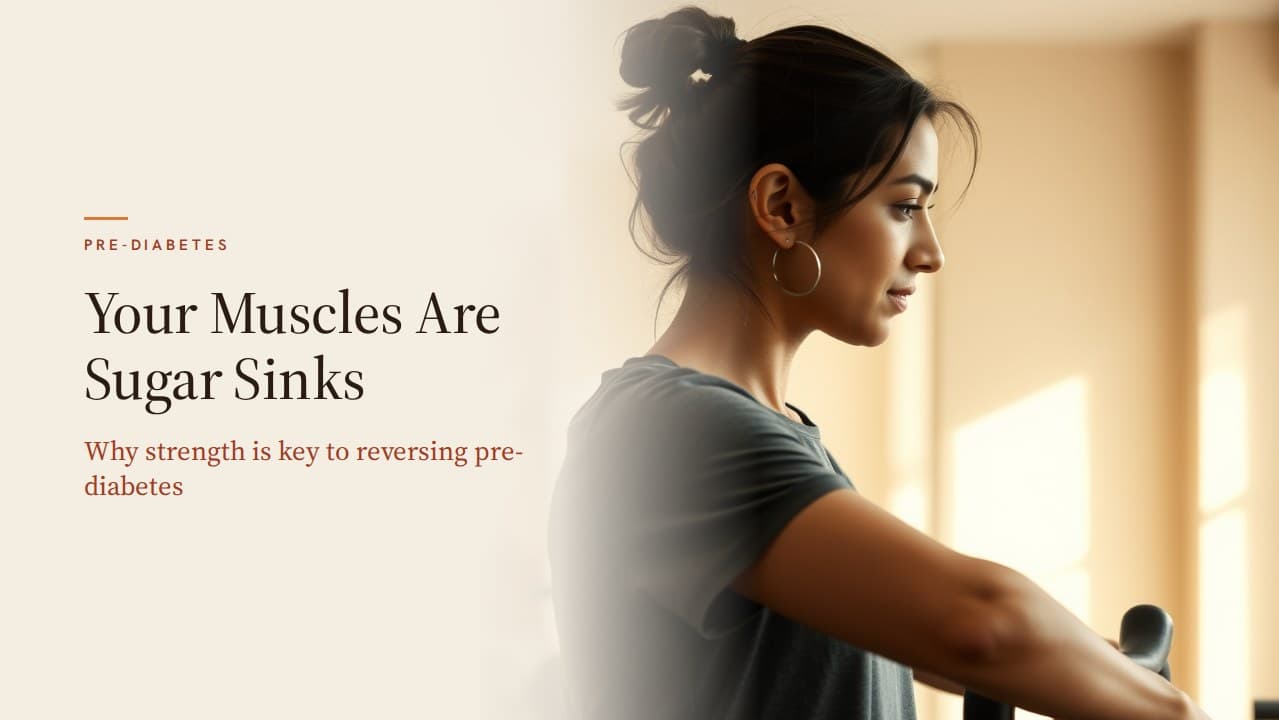
Skeletal muscle is the largest consumer of glucose in the body, and during strength training it can pull sugar from the blood independently of insulin. Cardio alone builds little muscle, which is why many urban professionals end up skinny fat. Checking free testosterone, DHEA-S and vitamin D3 first tells you whether your body is ready to build muscle.
The short version
- More muscle means more capacity to absorb glucose without much insulin.
- Strength training lets muscle take up sugar independently of insulin.
- Cardio alone does not build significant muscle; skinny fat is common.
- Free testosterone, DHEA-S and vitamin D3 show whether you can build muscle effectively.
Sound like you? Our 2-minute health assessment shows which causes are worth checking first.
When Indian professionals are told they need to exercise to manage their blood sugar, they usually start jogging, cycling, or spending hours on the treadmill. While cardiovascular exercise is excellent for heart health, it is not the most effective tool for reversing insulin resistance.
If you want to fundamentally change how your body processes glucose and prevent Type 2 diabetes, you need to look at your muscles. Building strength is the ultimate clinical intervention for metabolic health.
The Metabolic Power of Muscle
Skeletal muscle is the largest consumer of glucose in the human body. Think of your muscles as massive sponges or "sugar sinks." The more muscle mass you have, the more capacity your body has to absorb glucose from your bloodstream without relying heavily on insulin.
When you perform strength training, your muscles can actually pull sugar out of the blood independently of insulin. This gives your overworked pancreas a crucial break and rapidly improves your overall insulin sensitivity.
Why Cardio Isn't Enough for Urban Dwellers
Many urban dwellers in their 30s and 40s suffer from "skinny fat" syndrome. They might have a normal body weight, but they lack sufficient muscle mass and carry dangerous amounts of visceral fat.
Cardio alone does not build significant muscle mass. In fact, excessive chronic cardio without adequate protein and recovery can sometimes elevate cortisol, further complicating insulin resistance. To effectively reverse pre-diabetes, strength training must be the foundation of your fitness protocol.
Using Clinical Data to Build Your Fitness Protocol
Before you start lifting heavy weights, you need to understand your current baseline. Deep blood testing can reveal if you have the necessary hormonal support to build muscle.
Checking markers like Free Testosterone, DHEA-S, and Vitamin D3 is essential. If you are severely deficient in these areas, building muscle will be an uphill battle. Opwel's deep testing approach provides the data necessary to ensure your body is primed for strength and recovery.
Securing Your Metabolic Healthspan
Building muscle is an investment in your longevity. As we age, we naturally lose muscle mass, which directly correlates with a higher risk of metabolic disease.
By incorporating targeted strength training into your routine today, you are physically building a defense system against pre-diabetes. Stop guessing with your fitness routine. Partner with Opwel to get the clinical insights needed to build a resilient, insulin-sensitive body.
Common questions
Skeletal muscle is the largest consumer of glucose in the body. More muscle gives you more capacity to clear glucose from the blood, and strength training lets muscle absorb sugar independently of insulin.
Cardio is good for the heart but does not build significant muscle. For reversing pre-diabetes, strength training should be the foundation.
Markers such as free testosterone, DHEA-S and vitamin D3, because severe deficiencies make building muscle much harder.
Written by Farhat Ali Khan, Co-founder, Opwel.
Published . Last updated .
General health information. It is not medical advice and it is not a substitute for a consultation about your own situation.
This article is general health information. It is not a diagnosis and it is not advice about your own health; speak to a doctor before changing your treatment, diet or supplements.